A friend of mine asked me a question the other day that I have been turning over in my mind ever since. He is thirty years old, carrying about twenty-two extra pounds that he wants gone, and he wanted to know: is cycling the right hobby for this? Will it actually work? And more importantly, will he stick with it long enough to find out?
I did not have a simple yes or no answer for him, and I suspect that is exactly why the question has lingered. Because the honest truth is that cycling can be a phenomenal way to lose weight, but only if you approach it as something more than a calorie-burning machine. If you treat it like a chore — like a treadmill you happen to sit on — you will quit within a month. If you treat it like an adventure, it will quietly reshape your body while you are too busy enjoying the ride to notice.
Let me start with the part everyone wants to know first: the numbers. A person weighing around two hundred pounds can expect to burn somewhere between five hundred and eight hundred calories per hour of moderate cycling, depending on speed, terrain, and effort. That is a significant burn. Do the math and twenty-two pounds, at roughly three thousand five hundred calories per pound, comes out to about seventy-seven thousand calories that need to disappear. Spread that across three rides a week of an hour each, and you are looking at roughly four to five months to reach your goal through cycling alone — assuming you do not change anything else about how you eat. If you add in some dietary awareness, even just cutting out sugary drinks or late-night snacking, you can accelerate that timeline meaningfully.
But numbers are clean and life is messy, so let me tell you what actually happens when a beginner starts cycling for weight loss.
The first two weeks are going to hurt in ways you did not know your body could hurt. Your sit bones will protest every bump in the road. Your legs will feel like they are filled with wet cement the morning after your first real ride. You will be out of breath climbing hills that do not even look like hills. This is completely normal and it passes faster than you think. By week three, your body starts adapting. The saddle stops feeling like a medieval torture device. Your lungs learn to work with your legs instead of against them. You start noticing that the hill on Maple Street is just a little bit easier than it was last Tuesday.
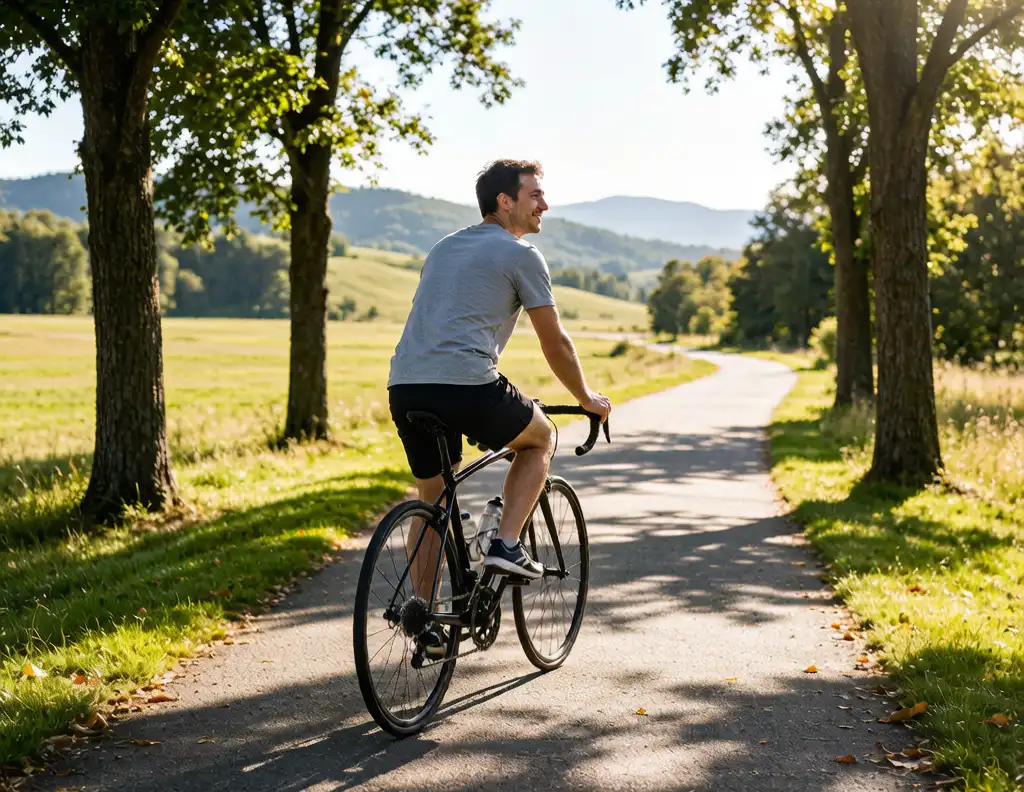
This is where the magic starts. Not dramatic weight loss — that comes later — but something more important: you start feeling capable. You go from dreading your rides to looking forward to them. You find yourself checking the weather not to see if it will ruin your plans, but to figure out the best window to get out on the road. You start noticing things you never noticed from a car — the way the light filters through the trees on a particular stretch of road, the smell of fresh-cut grass in the suburbs, the quiet hum of your tires on smooth asphalt. These are not calorie-burning metrics. These are the reasons you keep coming back.
The weight loss itself follows a predictable pattern, and I want to be upfront about this because too many beginners quit right before the breakthrough. In the first month, you might lose a few pounds — maybe more if you were starting from a very sedentary baseline. This is mostly water weight and your body adjusting to the new demand you are placing on it. Then comes the plateau. Around weeks four through eight, the scale might barely move, and this is the moment when a lot of people decide it is not working and give up. Do not give up here. What is actually happening is your body composition is changing. You are losing fat and building muscle in your legs and core, and muscle weighs more than fat by volume. Your pants might be fitting looser even if the number on the scale has not budged. Pay attention to how your clothes fit. Pay attention to how you feel climbing stairs. Pay attention to your face in the mirror — my friend’s specific hope about seeing it in his jawline is not vanity; it is a legitimate and common reward of sustained cardiovascular exercise.
After about two months of consistent riding, the real fat loss kicks in. Your metabolism has adjusted upward. Your body has become more efficient at burning fat for fuel during longer rides. You have probably gotten curious enough to start thinking about what you eat before and after riding, not because someone told you to, but because you can feel the difference between a ride fueled by a good breakfast and a ride fueled by nothing. This natural progression toward better eating habits is, in my experience, far more sustainable than any diet you force yourself onto.
Now, how often should you ride? The standard recommendation for general health is one hundred fifty minutes of moderate aerobic activity per week, which breaks down to about three rides of fifty minutes each. For weight loss, I would suggest aiming a little higher: four rides per week, with three of them being your standard hour-long efforts and one being a longer weekend ride that pushes your duration to ninety minutes or two hours. The longer ride is important. It teaches your body to burn fat efficiently and it builds the kind of deep cardiovascular fitness that raises your resting metabolism even on days you do not ride.
But here is the most important advice I can give a beginner, and it is the thing nobody told me when I started: do not make every ride a workout. Some rides should just be rides. Ride to the coffee shop. Ride to a friend’s house. Ride to nowhere in particular, just to see where a road goes. The goal is to weave cycling into the fabric of your life rather than cordoning it off as an exercise obligation. When cycling becomes your default way of getting around for trips under five miles, the calorie burn becomes invisible and automatic. You stop thinking about weight loss and start thinking about which route has the best view or the smoothest pavement.
A few practical notes for the absolute beginner. Get a bike that fits you — this matters more than how much it costs or what brand is on the frame. An uncomfortable bike is a bike that gathers dust in the garage. Invest in a decent pair of padded shorts; your sit bones will thank you. Learn how to fix a flat tire before you need to fix a flat tire. Carry water on every ride, even short ones, because dehydration feels a lot like fatigue and will cut your rides short. And please, wear a helmet. Every time. No exceptions.
Is cycling an easy hobby to stick with? That depends entirely on whether you let yourself fall in love with it. If you approach it as a weight-loss tool, you will abandon it the moment the scale disappoints you. If you approach it as a way to explore your neighborhood, clear your head after a stressful day, feel the wind on your face, and quietly transform your body in the process, then yes — it is one of the easiest hobbies to maintain. Because it stops being a hobby and starts being just how you move through the world.
Twenty-two pounds is a perfectly reasonable goal. With consistent riding and modest attention to what you eat, you can absolutely get there. But I suspect that by the time you do, the number on the scale will not be the thing you are most proud of. It will be the first time you climbed that hill without stopping. It will be the morning you woke up and your legs felt strong before your feet even hit the floor. It will be the ride where you looked around and realized you were smiling for no particular reason at all. That is when you will know the hobby took.
So yes. This is the right hobby. Get on the bike. The weight will take care of itself.