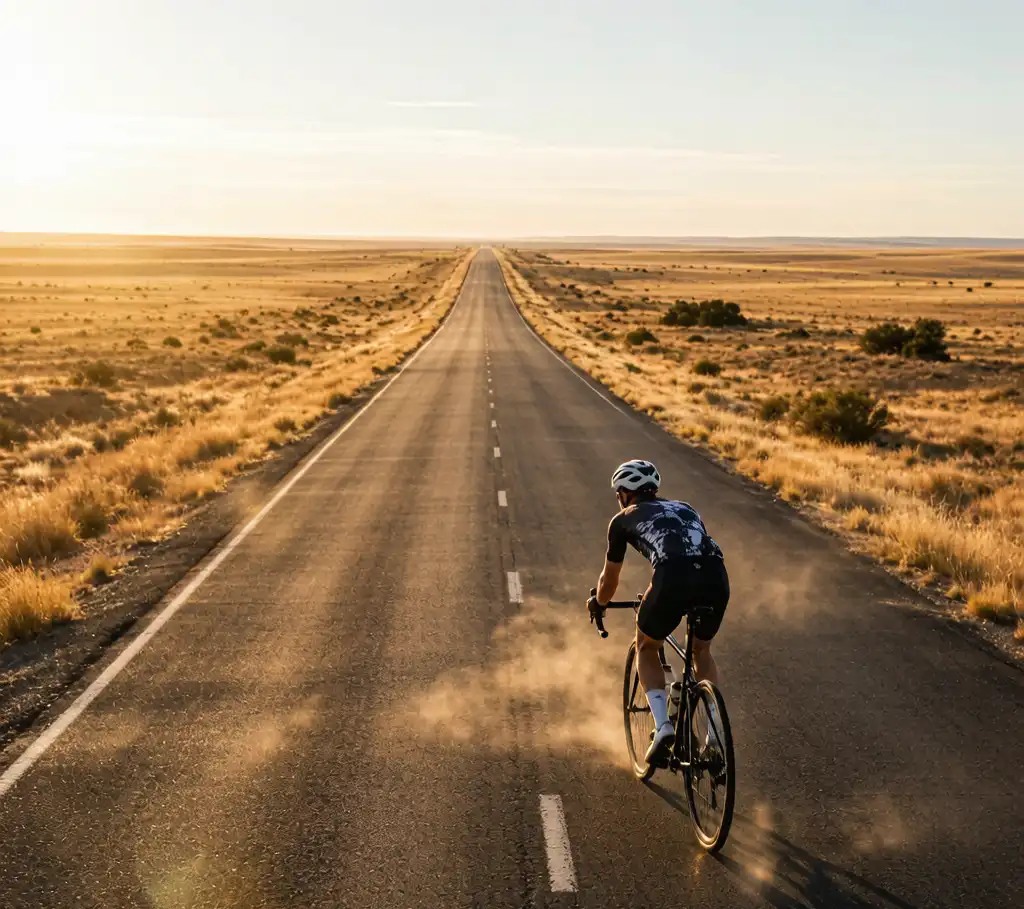
It was an ordinary afternoon, the kind where the heat presses down on everything and the air feels thick enough to chew. I was inside my house, probably doing something completely forgettable, when something through the window caught my eye — a shape on the pavement that should not have been there.
I stepped outside and my stomach dropped. A cyclist was lying motionless on the road, right in front of my house. His bike was on its side a few feet away, wheels still spinning lazily in the afternoon glare. He was not moving. For a handful of seconds that felt much longer, I stood frozen, trying to process what I was seeing. There was no car pulled over, no broken glass, no screech marks on the asphalt — just a man on the ground and a bicycle resting where it had skidded to a stop. Whatever had happened, it had happened quietly, and he had been completely alone.
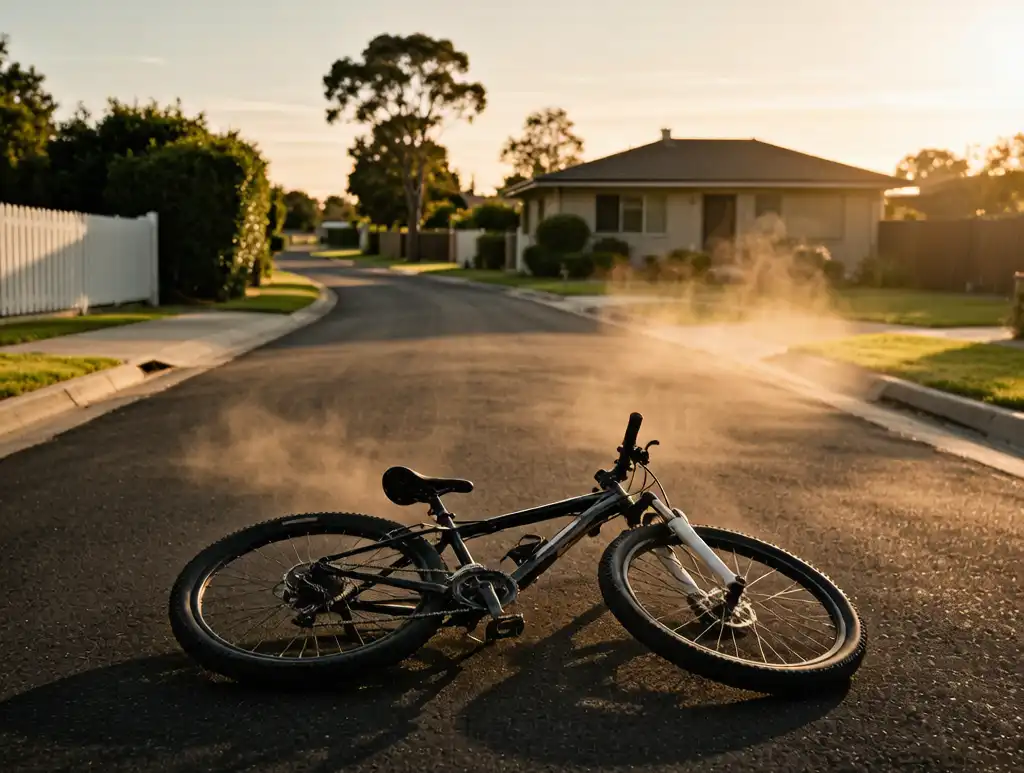
I called for an ambulance immediately. The dispatcher’s voice was calm and methodical, walking me through the standard questions while I tried to answer without my voice shaking. Is he breathing? Yes, thank God. Is he bleeding? I could see a trickle of blood near his temple, pooling on the hot blacktop. Has he moved at all? No. Not yet.
The minutes waiting for the ambulance stretched into something surreal. I stayed near him, not wanting to move him in case there was a neck or spine injury, but also acutely aware of how vulnerable he looked lying there — no helmet, his head having taken the full impact against the unforgiving road surface. The heat was blistering, the kind of day where the asphalt practically radiates waves of stored sunlight back up at you. I tried to shield him from the worst of the sun with my own shadow, which felt like the smallest, most useless gesture in the world.
When the paramedics arrived, they moved with the practiced efficiency of people who have seen this exact scene too many times. They checked his vitals, stabilized his neck, asked me the same questions the dispatcher had asked. I told them I had no idea what happened. There were no other vehicles. No witnesses. Just a man on a bicycle who, for reasons unknown, had gone down and hit his head on the road. Without a helmet.
I keep replaying that image in my mind: his head against the pavement, no barrier between his skull and the hard surface that cars roll over every day. A helmet would not have prevented his fall. It would not have kept him from getting heat exhaustion or losing his balance or whatever chain of events led to that moment. But it almost certainly would have absorbed at least some of the impact — maybe most of it — and kept his head from being the first and only thing to break his fall.
Here is the thing I need to say, and I need to say it plainly: please wear a helmet. I know how it sounds. I know it feels like nagging, like I am stating the obvious, like every cyclist has heard this a thousand times before. But I have now stood on the side of the road watching a stranger lie unconscious with blood on his temple, and I am telling you that the obvious thing is obvious for a reason. A helmet is not magic. It will not save you from a collision with a truck running a red light. It will not protect your collarbone or your ribs or your knees. What it will do is give your head a fighting chance when — not if — you find yourself unexpectedly on the ground.
People think it will not happen to them. I understand that mindset because I have probably had it myself at various points in life. You are a careful rider. You watch for cars, you signal your turns, you know your routes. You have been cycling for years and nothing bad has ever happened. But this man was probably careful too. He was probably experienced. He was probably not expecting this afternoon to end with paramedics lifting him onto a stretcher. Accidents do not schedule appointments. They do not check your cycling resume before deciding to show up. One moment you are pedaling home in the heat, and the next moment your head is on the pavement and a stranger is calling 911 for you.
The ambulance team worked on him for what felt like a long time before loading him up. I stood there, feeling useless, answering the same questions from the police officer who arrived shortly after. No, I did not see it happen. No, there were no other cars around. Yes, it is very hot today. I gave my statement and watched the ambulance pull away, lights flashing but no siren — a small mercy, maybe, or just protocol for a situation that was stable enough.
Later, I got an update. He regained consciousness before they took him away. The relief I felt was immense, the kind that makes your knees feel momentarily unreliable. He seemed to be OK, at least for now. The working theory is heat stroke — the temperatures that day were brutal, the sun unrelenting, and it is entirely possible that he simply overheated, lost his balance, and went over before he even knew what was happening. The fact that no other vehicles were involved is simultaneously reassuring and deeply unsettling. It means this could happen to anyone, anywhere, on any hot day, on any quiet street.
I have been thinking about that a lot since it happened. We talk so much about the dangers of cars and traffic, and rightly so — distracted drivers and aggressive passing are real threats that every cyclist faces. But sometimes the danger is more mundane. Sometimes it is just the heat. Sometimes it is a patch of gravel you did not see. Sometimes it is exhaustion or dehydration or a momentary lapse in concentration. The road does not care why you fell. The road is just hard, and your head is just soft, and the space between them is exactly where a helmet belongs.
I am not trying to be dramatic. I am not trying to scare anyone off their bike. Cycling is one of the great joys in life, and the physical and mental health benefits far outweigh the risks for most people. But that equation changes when you take unnecessary risks on top of the necessary ones. Riding without a helmet is an unnecessary risk. It costs you almost nothing — a few seconds to put it on, a few dollars to buy a decent one, maybe a mild case of helmet hair — and it could save you from a traumatic brain injury, a skull fracture, or worse.
The man on the road outside my house got lucky. He recovered consciousness. He went to the hospital in an ambulance rather than a different kind of vehicle. His story, as far as I know, has a continuation. But I cannot stop thinking about how close it came to ending differently, all because of a fall that no one saw coming on a street that no one would call dangerous. Please wear a helmet. Not because I am trying to lecture you. Not because I think I know better. But because I have seen what happens when you do not, and I do not want anyone else to have to see that outside their own front door.
Do me this one favor, from someone who has now stood over a stranger on hot asphalt and waited for sirens: put it on. Every ride. No exceptions. It may very well be the thing that gets you home.