The Complete Guide to Bicycle Tires: Types & Characteristics
 Justus
Choosing the right set of rubber is one of the most impactful decisions you can make for your bike. The type of bicycle tires you choose directly affects your speed, comfort, grip, and safety. While they all look like black circles, modern tire designs are highly specialized for different terrains and riding styles.
Here is a breakdown of the most common types of bicycle tires and what makes each one unique.
Road Tires: Built for Speed
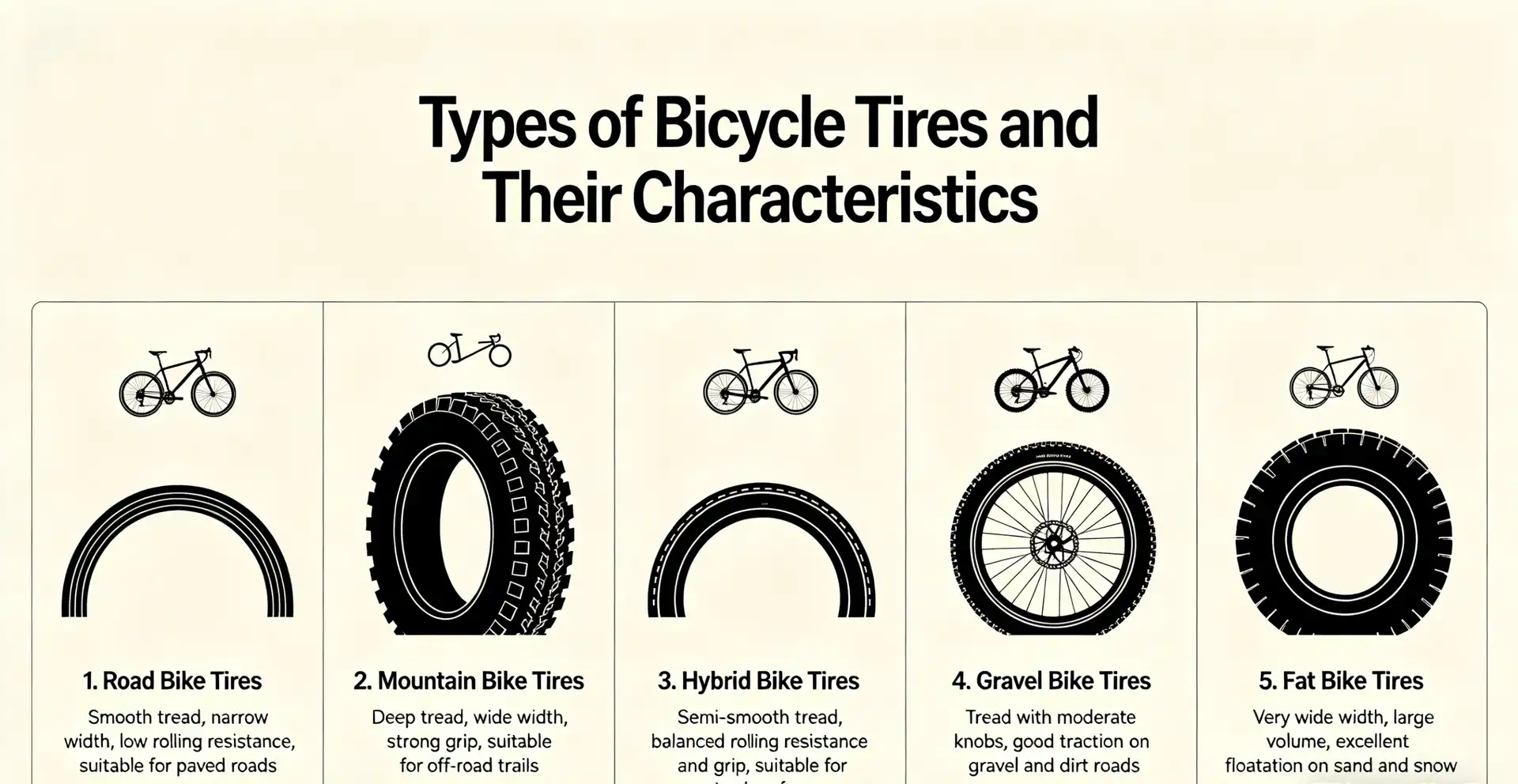
Road tires are designed for one primary purpose: minimizing rolling resistance on smooth, paved surfaces. They are generally narrow (23mm to 32mm) and feature a slick or very lightly treaded surface.
Key Characteristics:
- Low Rolling Resistance: The smooth center tread allows for maximum speed with minimum effort.
- Light Weight: Less rubber means a lighter overall bike, which helps with acceleration and climbing.
- High Pressure: These tires are typically inflated to 80-130 PSI, which reduces deformation and further lowers resistance.
- Limited Grip Off-Road: The lack of tread means zero traction on gravel, mud, or loose dirt.
Best For: Road cycling, commuting on pavement, touring, and racing. If you never leave the asphalt, these are your go-to bicycle tires.
Gravel Tires: The All-Rounder
Gravel tires have exploded in popularity. They bridge the gap between road and mountain bike tires, offering versatility for riders who mix pavement with dirt roads, fire trails, and light singletrack.
Key Characteristics:
- Moderate Width: Typically ranging from 35mm to 50mm. The extra width provides stability and comfort on rough surfaces.
- Variable Tread: They have a small, knobby center tread for grip on loose surfaces, but the tread is low enough to not feel sluggish on pavement.
- Lower Pressure: Run at lower pressures (30-60 PSI) for increased traction and vibration damping.
Best For: Adventure cycling, bikepacking, endurance road riding, and commuters who face a variety of road conditions.
Mountain Bike Tires: Grip and Control
Mountain bike tires are engineered for maximum traction over loose, rocky, and uneven terrain. They are wide (2.0 to 2.6 inches) and feature aggressive tread patterns with large, widely-spaced knobs.
Key Characteristics:
- Aggressive Tread: Deep, tall knobs dig into dirt and mud to provide cornering and braking traction.
- High Volume: The large air volume acts as a natural suspension system, absorbing bumps and roots.
- Tubeless Ready: Most modern MTB tires are designed to be run tubeless, which prevents pinch flats and allows for even lower pressures.
- High Rolling Resistance: All that grip comes at a cost. They are slow and heavy on pavement.
Sub-types include:
- Cross-Country (XC): Lighter with smaller knobs for speed.
- Trail/Enduro: A balance of weight and heavy-duty protection for aggressive riding.
- Downhill: Extremely heavy with massive, soft knobs for maximum grip at high speeds.
Best For: Mountain biking on trails, from smooth flow tracks to technical rock gardens.
Hybrid/Commuter Tires: The Practical Choice
These bicycle tires are the workhorses of the bike world. Designed for durability and puncture resistance, they prioritize reliability over outright speed or grip. They often have a smooth centerline for low rolling resistance on pavement, with small side knobs for traction on light gravel or grass.
Key Characteristics:
- Puncture Protection: Many feature a thick inner layer (like Kevlar or a rubber compound) to resist glass and thorns.
- Reflective Sidewalls: A common safety feature for night riding.
- Moderate Weight: Heavier than road tires, but lighter than MTB tires.
- Width: Usually 28mm to 42mm.
Best For: Daily commuting, fitness riding on rail trails, and casual errands.
Touring Tires: Built to Last
Touring tires are the marathon runners of the bicycle tire world. They are specifically designed to carry heavy loads (panniers, gear) over long distances, sometimes thousands of miles.
Key Characteristics:
- Extreme Durability: These are the heaviest and toughest tires available. They use thick casings and extra rubber to resist wear and punctures.
- Stiff Sidewalls: Reinforced to prevent the tire from flexing or “bouncing” under heavy loads.
- High TPI (Threads Per Inch): A high TPI casing allows the tire to be strong yet supple, providing a better ride over bumpy roads.
Best For: Long-distance bike touring, randonneuring, and heavy-duty commuting.
Making the Right Choice
Your ideal tire depends entirely on where you ride. Ask yourself these questions:
- What surface will I ride on 90% of the time? Paved roads call for road tires; dirt calls for gravel or MTB tires.
- What is my priority? Speed, comfort, durability, or traction?
- What clearance does my bike frame have? The most aggressive tire in the world won’t fit if your frame is too narrow.
By understanding the characteristics of each type of bicycle tires, you can transform your ride. The right set won’t just make your bike faster—it will make it more comfortable, capable, and fun.