I am one month into cycling, and there is a question that has been nagging at me every time I open the app: what exactly am I missing about Strava?
When I first got on the bike, everyone told me the same thing. You have to get Strava. It is the essential cycling app. It is where the community lives. It will change the way you ride. So I downloaded it, signed up for the Premium free trial, synced my Apple Watch, and started recording every ride. A few weeks in, I am honestly still trying to figure out what all the fuss is about.
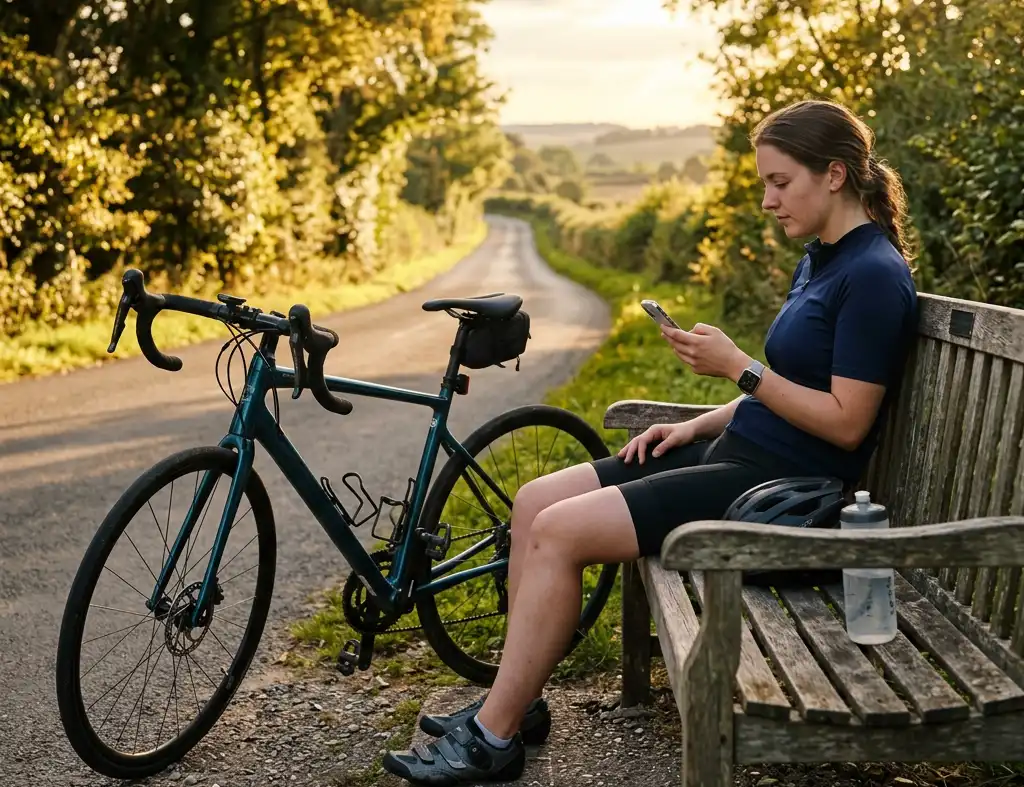
Do not get me wrong. I am not saying Strava is bad. It does exactly what it says on the tin: it tracks my rides, logs my mileage, records my personal records, and charts my progress over time. Those are genuinely useful things. But here is where I get stuck — I already have an Apple Watch on my wrist and Apple Fitness on my phone. Between the two of them, I can see my distance, pace, heart rate zones, calorie burn, elevation gain, and weekly trends. So what does Strava give me that I am not already getting? What is the thing that turns casual users into devoted subscribers who will not ride without hitting the record button?
I decided to dig into this question, not just by staring at the app but by listening to what experienced riders actually say about it. What I found is that the value of Strava reveals itself in layers, and at one month in, I have only peeled back the first one.
The first thing that seasoned cyclists point to is segments. On the surface, a segment is just a stretch of road or trail that Strava has designated as a competitive zone. Every time you ride through one, your time is automatically recorded and compared against everyone else who has ever ridden it, including your own past attempts. For a beginner like me, segments sound like a novelty at best and an ego death trap at worst. I am not trying to see my name at the bottom of a leaderboard every time I gas myself up a climb. But the deeper value of segments is not about beating strangers. It is about beating yourself. When you have ridden the same route fifty times, segments become invisible progress markers. You are not racing the local KOM legend — you are racing the version of you from last month, last season, last year. That is where the addictive quality comes from, and it is something you simply cannot access in your first few weeks of riding when every route is still new and every ride is still a personal record by default.
The second layer is integration. Strava is not really a standalone fitness tracker. It is more like a hub that connects to everything else. One rider mentioned intervals.icu, a platform for deeper training analytics that pulls data directly from Strava. Others sync their rides to TrainingPeaks, Zwift, or MyFitnessPal. Your Apple Watch captures the raw data, but Strava is the common language that lets all these tools talk to each other. If you ever move beyond casual riding into structured training — intervals, heart rate zone work, race preparation — Strava becomes the central nervous system of your fitness ecosystem. I am not there yet. But I can see how someone who trains with intention would find it indispensable.
The third layer is the one I initially dismissed as fluff: the social aspect. I am not someone who naturally gravitates toward posting workouts online for validation. The idea of giving and receiving kudos for a Tuesday evening spin seemed, frankly, a little silly. But I have started to notice something interesting. As my follow list grows, however slowly, there is a subtle accountability mechanism at work. When I see that a friend went out for an early morning ride before work, it nudges me to stop making excuses. When someone I follow completes their first metric century, it plants a seed of possibility in my head. The social feed is not just a highlight reel. For people who train alone most of the time — and especially for solo riders like me — it is a thread connecting you to a wider community. Group rides get organized there. Routes get shared there. Questions get asked and answered there. It is social media, yes, but it is social media with a genuine function.
There is also a practical, almost boring reason that loyal users stick around: equipment tracking. Strava lets you log which bike you use on each ride and automatically tracks the total mileage on each component. When your chain has done two thousand miles and needs replacing, Strava lets you know. When your cycling shoes are approaching retirement age, the data is right there. It is the kind of feature that sounds unnecessary until the moment you actually need it, and by then, you are grateful you had it running in the background.
So here is where I have landed after a month of using Strava, reading through comment threads, and listening to riders who have been at this far longer than I have. The app is not a revelation for the absolute beginner. When you are still discovering new roads, still figuring out what kind of rider you want to be, still just trying to build basic fitness, Strava feels like a fancy dashboard for data you already have. But the longer you ride, the more its value compounds. Segments become your personal stopwatch across seasons. Integrations turn your scattered fitness data into a unified training log. The social features transform solo riding into a shared experience. And equipment tracking quietly saves you from avoidable mechanical failures.
I do not know yet whether I will keep Premium when the trial runs out. But I do know this: I am going to keep recording my rides. Because one month is not enough to judge an app that was built for the long game. The riders who love Strava are not wrong about it. They are just seeing something that takes more than thirty days to come into focus.
And if nothing else, watching that yearly mileage number climb one ride at a time is quietly, persistently satisfying in a way that I was not expecting.