How to Choose Bicycle Frames: Steel, Aluminum, Carbon Fiber & More
 Justus
Choosing the right bicycle can feel overwhelming, especially when you start looking at the frame. The frame is the heart of your bike, dictating its weight, ride quality, durability, and cost. Understanding the materials used to make bicycle frames is the first step to finding your perfect match.
Let’s break down the most common materials: steel, aluminum alloy, carbon fiber, and titanium. We’ll explain what they are, how they ride, and who they are best for.
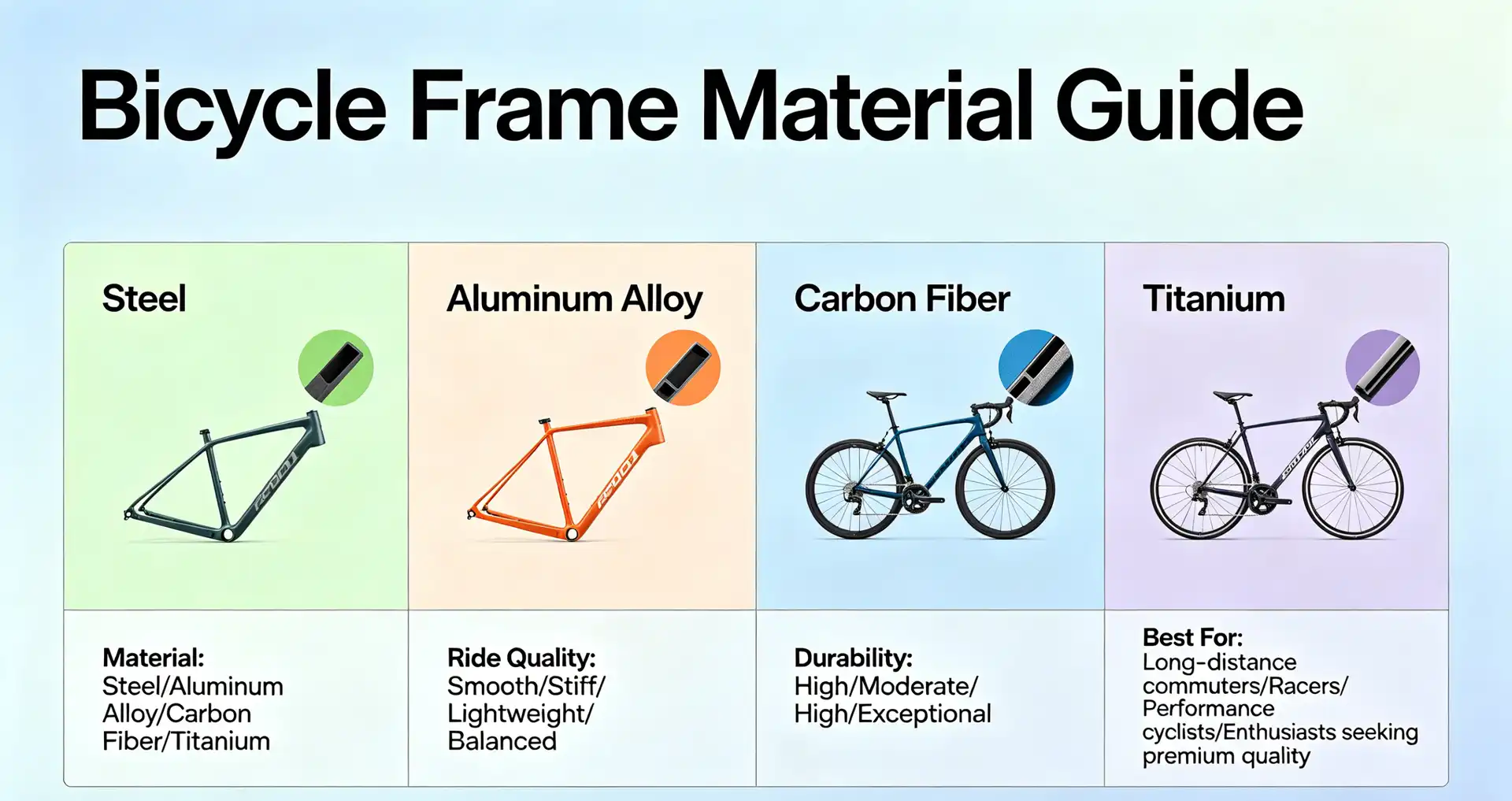
Steel: The Timeless Classic
Steel has been the backbone of cycling for over a century. While modern bikes often favor lighter materials, steel remains a beloved choice for its unique feel.
Characteristics of Steel
- Ride Quality: Steel is known for its incredible “compliance.” It flexes slightly to absorb road vibrations, making for a very comfortable, smooth ride over long distances.
- Durability: It is incredibly strong and resistant to fatigue. If a steel frame cracks (rare), a skilled welder can often repair it.
- Weight: Steel is the heaviest of the common frame materials. Modern, high-quality “Reynolds” or “Columbus” steel tubing is lighter than old gas-pipe frames, but it still can’t compete with carbon fiber or aluminum on the scales.
- Cost: Generally the least expensive material for custom or high-quality frames.
Who is it for?
Steel is for the touring cyclist, the randonneur (long-distance rider), and the commuter who values durability and a forgiving ride over pure speed. It’s also a favorite for bicycle messengers.
Aluminum Alloy: The Modern Workhorse
Aluminum (often called “aluminum alloy” because pure aluminum is too soft) took over the market in the 1990s and 2000s. It is now the most common material for mid-range to entry-level bicycle frames.
Characteristics of Aluminum
- Ride Quality: Aluminum is very stiff. This translates to excellent power transfer when you stomp on the pedals. However, it can also transmit road buzz and harshness to the rider, leading to a less comfortable ride over rough pavement.
- Durability: Aluminum does not rust, but it is susceptible to fatigue over many years. It cannot be repaired if cracked.
- Weight: A major selling point. Aluminum bicycle frames are significantly lighter than steel, offering a high strength-to-weight ratio at a low price.
- Cost: Very affordable, making it the go-to choice for budget-conscious riders.
Who is it for?
Aluminum is perfect for the entry-level road cyclist, the weekend warrior, and the mountain biker looking for a stiff, lightweight, and affordable frame.
Carbon Fiber: The High-Performance Option
Carbon fiber is a composite material made of woven carbon strands held together by a resin. It is the material of choice for professional racing and high-end enthusiast bikes.
Characteristics of Carbon Fiber
- Ride Quality: The holy grail of carbon is “tunability.” Engineers can design a frame to be incredibly stiff where needed (like the bottom bracket) and forgiving where comfort matters (like the seat stays). This provides a magical combination of speed and smoothness.
- Durability: Carbon fiber is very strong for its weight, but it is brittle. A sharp impact (like a crash or a hard object hitting the frame) can cause cracks or damage that is invisible to the naked eye.
- Weight: This is carbon’s superpower. It is the lightest material used for strong bicycle frames, allowing for bikes that weigh under 15 pounds.
- Cost: The most expensive material. High-quality carbon frames can cost several thousand dollars.
Who is it for?
Carbon fiber is for the competitive road racer, the climber obsessed with weight, and the serious enthusiast who wants the best possible performance and ride feel.
Titanium: The Best of Both Worlds
Titanium is a premium, exotic metal that combines the best traits of steel and aluminum. It is the material of choice for discerning cyclists who want a “forever bike.”
Characteristics of Titanium
- Ride Quality: Titanium offers a ride that is both very lively and incredibly smooth. It has the compliance of steel but is lighter and stiffer, providing a “springy” feel that many riders describe as magical.
- Durability: Titanium is virtually immune to corrosion and has an incredibly high fatigue life. It is arguably the most durable frame material available.
- Weight: Lighter than steel, but usually not as light as carbon fiber or high-end aluminum.
- Cost: Very expensive—often equivalent to or more than high-end carbon.
Who is it for?
Titanium is for the purist, the bike collector, and the rider who wants a high-performance, comfortable, and incredibly durable bike that will last a lifetime.
How to Choose Your Frame Material
Choosing between these materials comes down to your priorities. Ask yourself these three questions:
1. What is your budget?
- Low to Mid: Choose Aluminum. You get a great balance of weight and performance.
- Mid to High: Choose Steel (for comfort and durability) or Carbon (for performance).
- Premium: Choose Titanium (for a lifetime bike) or High-End Carbon (for max performance).
2. What kind of riding do you do?
- Long distance / Touring: Steel or Titanium are best for comfort and durability.
- Racing / Fast Group Rides: Carbon Fiber offers the best stiffness-to-weight ratio.
- Commuting / City Riding: Aluminum is cheap and durable. Steel is also great for its strength.
3. How much do you value comfort vs. speed?
- Value Comfort Above All: Steel or Titanium.
- Value Speed and Stiffness: Carbon Fiber or High-End Aluminum.
- Want a Balanced Bike: Aluminum (with a carbon fork for vibration damping).
Final Verdict
There is no single “best” material for bicycle frames. Each excels in different areas.
- Need a budget-friendly, lightweight bike? Get Aluminum.
- Want the ultimate in comfort and durability? Get Steel.
- Chasing every second on the road? Get Carbon Fiber.
- Want a do-everything bike that lasts forever? Get Titanium.
Test ride as many as you can. The “feel” of the frame is the ultimate deciding factor. Happy cycling!